Solutions available
I offer a range of services to meet the needs of every client. Have something else in mind? I'd be happy to work with you to create a custom quote.
-
Moving beyond the "vent session"
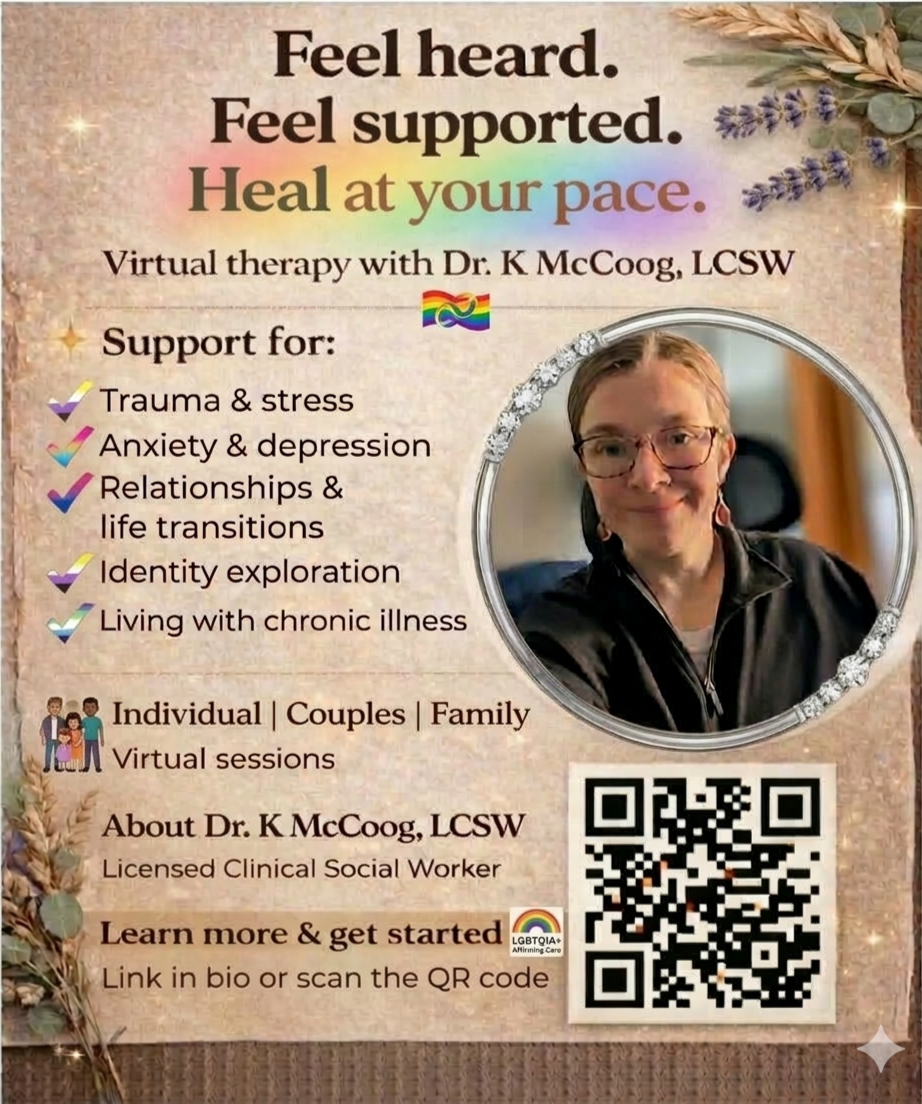
Expert outpatient therapy to help you navigate life’s transitions with purpose. More than a listening ear, I partner with you to build a clear, individualized clinical roadmap—identifying goals, practical strategies, and measurable steps—so you regain your footing, reduce overwhelm, and move forward with confidence and clarity. Sessions blend evidence-based approaches with real-world problem solving, giving you tools that work between appointments and lasting change beyond them.
Check the “About Me” page for my expertise and background experiences.
-
Consultation: Supporting professionals and the environment
I offer clinical consultations for a wide range of systems—schools, organizations, multidisciplinary teams, athletic programs, and business ventures. Flexible, expert advice when you need it: book hourly support across topics from strategic planning to targeted problem-solving. Each focused session helps clarify goals, map practical next steps, and identify opportunities for growth tailored to your setting and team.
-
Supervision: Mentoring the future of the field Strategic clinical supervision for associates seeking licensure. Gain the insight, ethical grounding, and clinical hours you need to transition from a learner to a leader in the mental health field.
What I offer
Personalized supervision tailored to your theoretical orientation and career goals
Integrative approach that respects your preferred modalities (CBT, psychodynamic, ACT, DBT, trauma-informed care, etc.)
Goal-driven learning plans that map competencies to licensure requirements and career milestones
Consistent, scheduled supervision that meets state licensure requirements for hours and documentation
Flexible weekly or biweekly sessions (individual and group options)
Thorough documentation: supervision contracts, hour logs, progress notes, and verification letters for licensing boards
Telehealth and in-person options to fit clinic schedules
Case conceptualization and clinical skill development
Live case reviews and recorded session feedback (with client consent)
Development of clear, evidence-based case formulations and treatment plans
Skill training in assessment, diagnosis, treatment planning, crisis management, and outcome measurement
Ethical training and professional identity formation
Applied ethics discussions tied to real cases and documentation
Boundary setting, informed consent, mandatory reporting, and cultural humility
Support in building a professional identity: consultation skills, multidisciplinary collaboration, and leadership readiness
Career coaching and post-licensure planning
Guidance on job search, private practice startup, supervision of others, and maintaining competence
CV/resume feedback and mock interviews or mock supervision demonstrations
Why choose this supervision
Experienced supervisor committed to trainee growth and board-compliant practices
Structured yet flexible approach that adapts to your learning style and caseload
Emphasis on measurable skill gains, ethical clarity, and confidence in clinical decision-making
Next steps
Initial consultation to review your licensure requirements, clinical experience, and goals
Create a tailored supervision plan with schedule, required documentation, and expectations
Begin regular supervision sessions with ongoing evaluation and adjustments
To schedule an initial consultation, please provide your state of licensure, current hours toward licensure, preferred supervision format (individual or group), and availability.
-
Training for teams & organizations
Need team building? Restructuring? Evidence-based practices? I offer a wide variety of trainings for groups of 3–100, and can customize content to your needs.
Available trainings
Trauma-informed care for staff: principles and practical classroom strategies.
Implementing tiered supports: using universal and targeted interventions for behavioral health.
Evidence-based practices overview: CBT-informed techniques, mindfulness, and behavioral strategies adapted for children.
Team building & collaboration: exercises to strengthen communication, role clarity, and shared routines.
Program implementation & sustainability: planning, fidelity monitoring, and data-driven adjustments.
Crisis response & de-escalation: safe techniques for reducing escalation and supporting return to learning.
Formats & logistics
Delivery options: in-person workshops, virtual trainings, or hybrid sessions.
Group size: tailored for small teams (3–10), medium groups (10–40), or large groups (40–100).
Duration: half-day, full-day, multi-day, or modular series.
Materials: participant handouts, leader guides, lesson plans, and take-home resources for caregivers.
Customization: content aligned to your population, setting (school, clinic, youth program), and goals.
Why choose this program
Child-centered, developmentally appropriate methods.
Practical, hands-on skills children and adults can use immediately.
Emphasis on caregiver and staff collaboration to reinforce learning.
Flexible delivery and evidence-informed practices to fit your setting.
Next steps
Tell me your setting (school, clinic, community program), target ages, preferred format, and group size.
I’ll propose a tailored outline, session plan, and pricing estimate.
Children’s Program — Equipping the Next Generation
A specialized program that teaches children vital coping skills to manage emotions and build resilience. Our curriculum helps kids recognize feelings, develop healthy coping strategies, and practice problem-solving so they leave with a lifelong toolkit for emotional wellbeing.
Core components
Emotion literacy: age-appropriate lessons that help children identify and name emotions in themselves and others.
Coping skills: practical techniques (breathing, grounding, self-talk, sensory strategies) taught through games, stories, and role-play.
Problem-solving & decision-making: guided activities that build logical thinking, conflict resolution, and responsible choices.
Self-regulation practice: activities and routines that teach children to manage impulses and calm their bodies.
Social skills & empathy: cooperative games and structured peer interactions to strengthen compassion, listening, and communication.
Caregiver involvement: brief trainings and take-home materials so parents and teachers reinforce skills consistently.
Age groups & formats
Early childhood (3–6): play-based, sensory-rich sessions (20–30 minutes).
Elementary (6–10): interactive lessons with stories, crafts, and role-plays (30–45 minutes).
Upper elementary / preteen (10–12): skills practice, group problem-solving, and brief psychoeducation (45–60 minutes).
Multi-session programs: 6–12 week curricula with measurable skill-building goals.
One-off workshops: single sessions for schools, camps, or community events.
Outcomes & measures
Improved emotion regulation and decreased tantrums or meltdowns.
Increased use of adaptive coping strategies.
Better peer relationships and reduced conflict.
Measurable gains tracked through simple pre/post check-ins, teacher/parent reports, and age-appropriate self-assessments.
Let’s Work Together!
If you're interested in working with me, please fill out the form with a few details about your needs. I'll review your message and get back to you within 48 hours.